


A Journey Through Vienna: History, Art, and a Captivating Atmosphere
My journey to Vienna began with Turkish Airlines. The in-flight meal service was surprisingly good, making the trip enjoyable right from the start.
After landing at Vienna International Airport, getting to the city center was incredibly easy. I took a train directly from the airport to Wien Mitte Station without any . This smooth and efficient transportation system was my first impression of how well-organized Vienna is.
The moment I stepped into the city, I was drawn into its breathtaking atmosphere. With its grand historic buildings, churches, and museums, Vienna feels like a living open-air museum.
St. Stephen’s Cathedral: Where Grandeur Meets Dark History
My first stop was St. Stephen’s Cathedral, one of the most important religious and cultural landmarks in the city, dating back to the 12th century. Its Gothic architecture is truly mesmerizing.
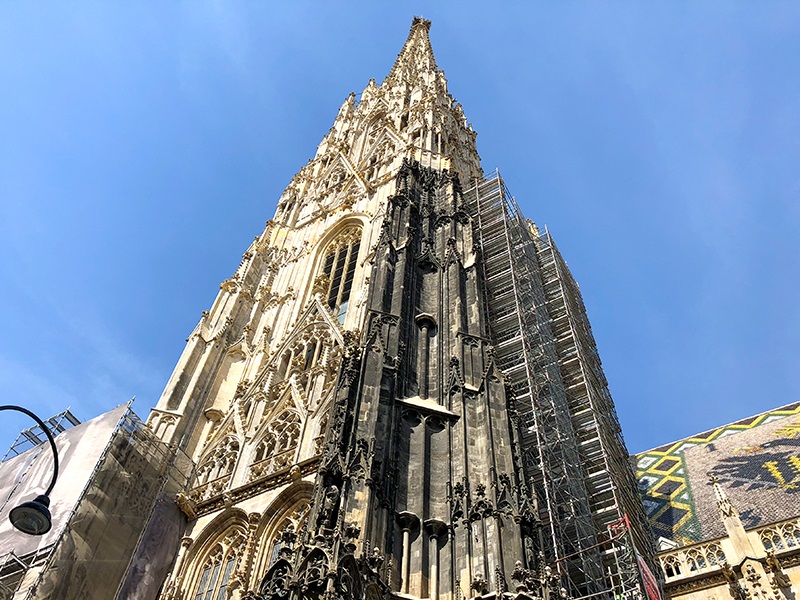
Climbing the tower via a narrow staircase of 256 steps offers a stunning panoramic view of Vienna. It may be a bit exhausting, but it is absolutely worth it.
However, what makes the cathedral even more fascinating is its deep and sometimes unsettling history.
At the end of World War II, the German commander Sepp Dietrich ordered the cathedral to be destroyed. The officer responsible, Gerhard Klinkicht, refused to carry out the order, ultimately saving the structure.
Beneath the cathedral lies a lesser-known reality: the skeletal remains of approximately 11,000 people. Most visitors are unaware of this crypt, accessed by a modest staircase on the left side of the main floor.
During the plague outbreak of 1735, nearby cemeteries were cleared and thousands of bodies were transferred here. Due to the overwhelming stench, prisoners were forced to descend into the pits to rearrange decomposing remains. Even today, mixed bone piles and decayed coffin fragments can still be seen.
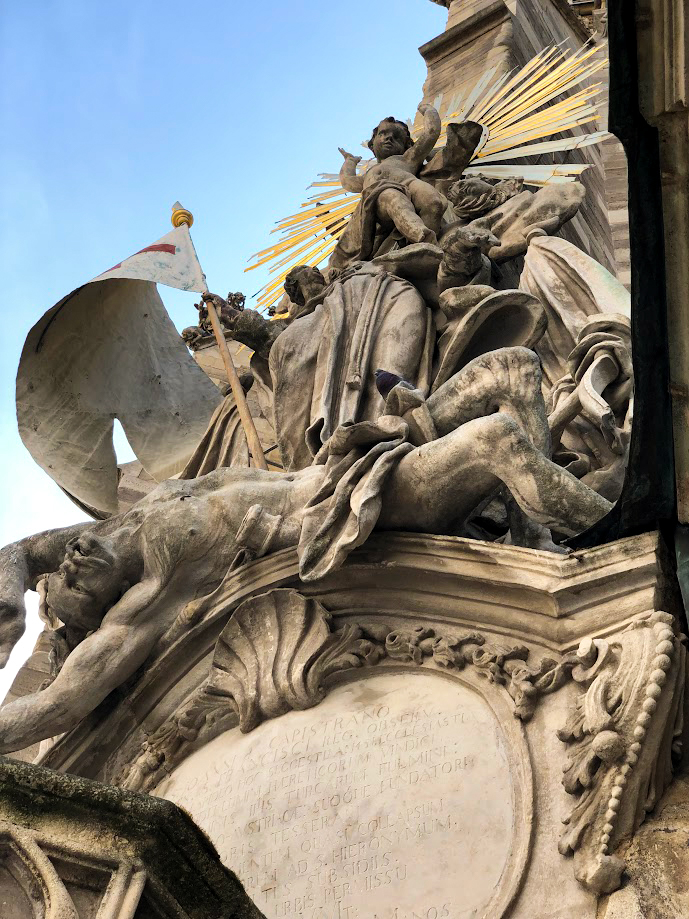
The cathedral also bears strong connections to Ottoman history. In 1456, Saint John of Capistrano preached crusades against the Turks here. Some sculptures within the cathedral depict defeated Ottoman soldiers (Janissaries) beneath the feet of religious figures, reflecting the political and religious narratives of the time.
The cathedral’s famous bell, Pummerin, was cast using metal from cannons captured after the Siege of Vienna (1683). In total, 208 out of 300 captured cannons were melted down for its creation.
In short, this cathedral is not just a place of worship—it is a living monument reflecting centuries of conflict and history between Europe and the Ottoman Empire.
Walking Through History: Streets of Vienna
As you walk through Vienna, every corner reveals a new story.
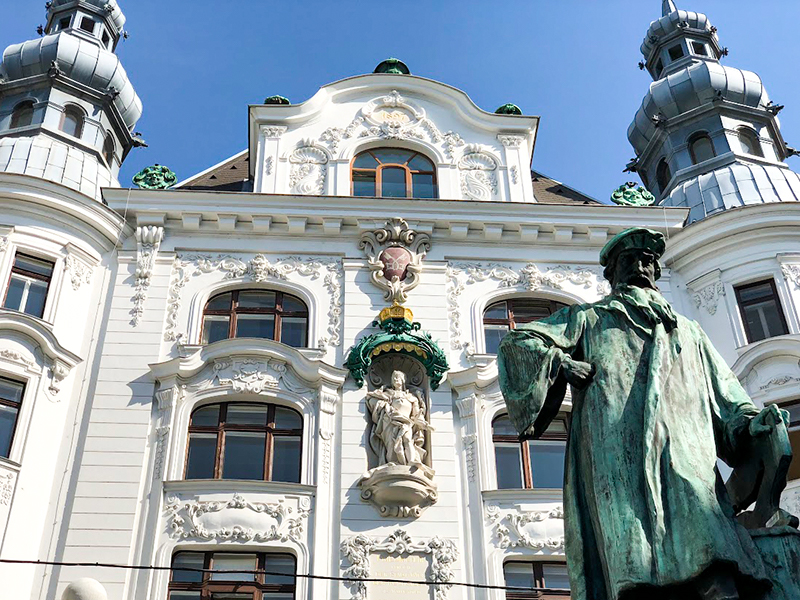
At Lugeck Square, I was particularly impressed by the Johannes Gutenberg Monument and the historic Regensburger Hof behind it. The area beautifully reflects the city’s deep historical roots.
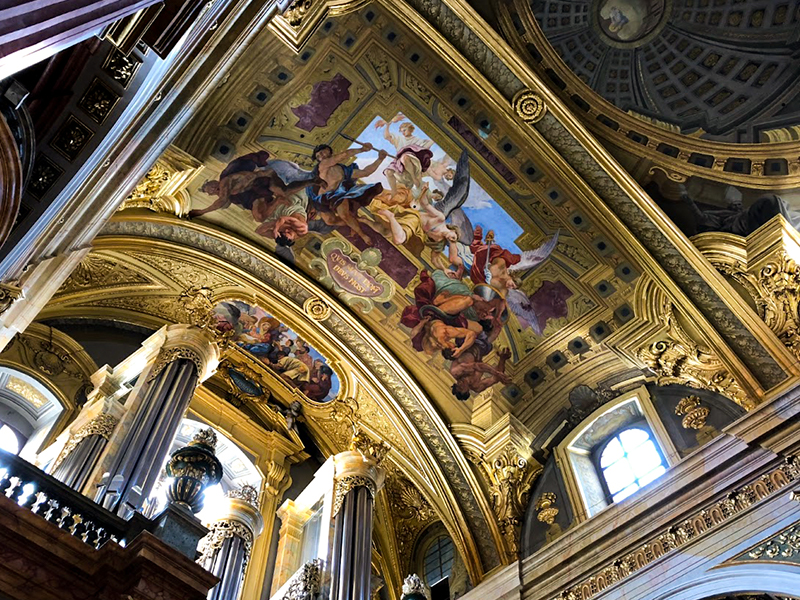
The Jesuit Church: Illusion at Its Finest
Another stop was the Jesuit Church. From the outside, it appears quite simple—but step inside, and it tells a completely different story.
In 1703, Andrea Pozzo transformed the interior using the trompe-l’œil technique. A flat ceiling was painted to look like a grand dome, creating a stunning optical illusion.
The entire church feels like a stage set:
- Marble surfaces are actually painted imitations
- Columns and decorations are designed to appear more elaborate than they really are
- Ceiling frescoes are crafted to deceive the eye
With its faux marble columns, gilded ornaments, and allegorical frescoes, the interior is truly breathtaking.
The Soul of Vienna: Parks and Art
One of the things I loved most about Vienna was its parks. The city offers a perfect balance between history and nature.
In Stadtpark, the Johann Strauss Monument stands out as one of the city’s most iconic landmarks. Built in 1921, the statue shines like gold especially when sunlight hits it directly, making it perfect for photography.
Hofburg Palace: 700 Years of Empire
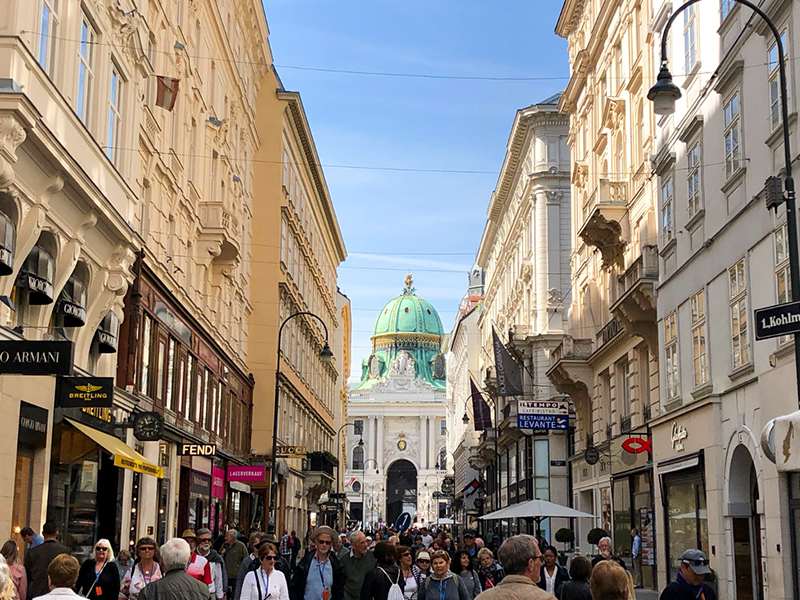
My next destination was Hofburg Palace.
Dating back to the 13th century, this vast complex reflects over 700 years of architectural evolution. It houses millions of historical artifacts, each corner telling a different story.
There are also hidden tunnels beneath the palace, once used for defense and escape. In front of the palace, at the Outer Castle Gate, military ceremonies are still held, preserving imperial traditions.
The Danube: Europe’s Lifeline
To truly understand Vienna, you must also understand the Danube River.
Stretching approximately 2,960 kilometers, it originates in the Black Forest of Germany and flows through ten countries before reaching the Black Sea.
During the Ottoman era, the route from Istanbul to Vienna—known as the “middle corridor”—intersected with the Danube at key points. Cities like Belgrade and Buda were among the most important commercial and military hubs along this route.
Vienna City Hall: The Living Heart of the City
One of my final stops was Vienna City Hall.
With its tower rising over 100 meters, it dominates the city skyline. Its neo-Gothic architecture, intricate stonework, and grand halls make it not only an administrative building but also a work of art.

In winter, the square in front hosts the magical Christkindlmarkt, one of Vienna’s most beautiful Christmas markets. In summer, especially during International Workers’ Day, the area transforms into a vibrant festival space with open-air film screenings, concerts, and street food.
Final Thoughts
Vienna is more than just a city of landmarks. It is a place where history, art, and elegance exist in perfect harmony.
It’s not just a place to visit—it’s a place to feel.
In my next blog post, I will explore Vienna’s must-see art and natural history museums.
Stay tuned 😉
 English
  Turkish
  Spanish
  German
  French
  Russian
  Vietnamese
  Thai
Thai  Korean
  Japanese
  Kurdish
  Chinese