

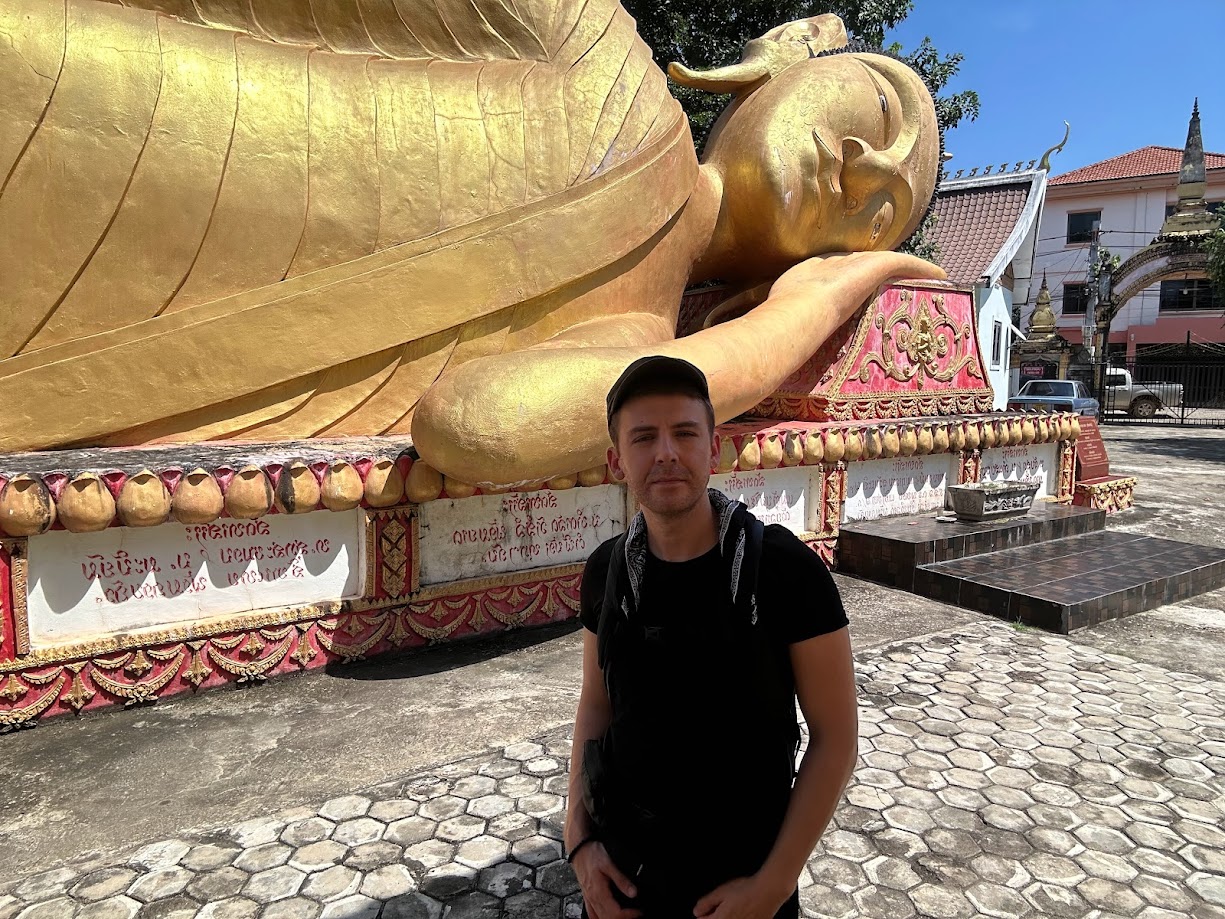
In the heart of Southeast Asia, accompanied by the whispers of the meandering Mekong River, Laos feels like a time machine for those seeking peace. The traces of Theravada Buddhism, spread across the country, are felt not only in stone structures but in every rhythm of daily life. If your path leads you to this mystical geography, I have prepared a guide for what awaits you in the quiet corridors of the temples.
The Buddhist Worship Culture and the “Reclining Buddha”
In Laos, Buddhism is not just a belief system; it is a way of life. The first thing you will notice upon entering the temples (Wat) is an atmosphere of peace blended with deep silence and the scent of incense.
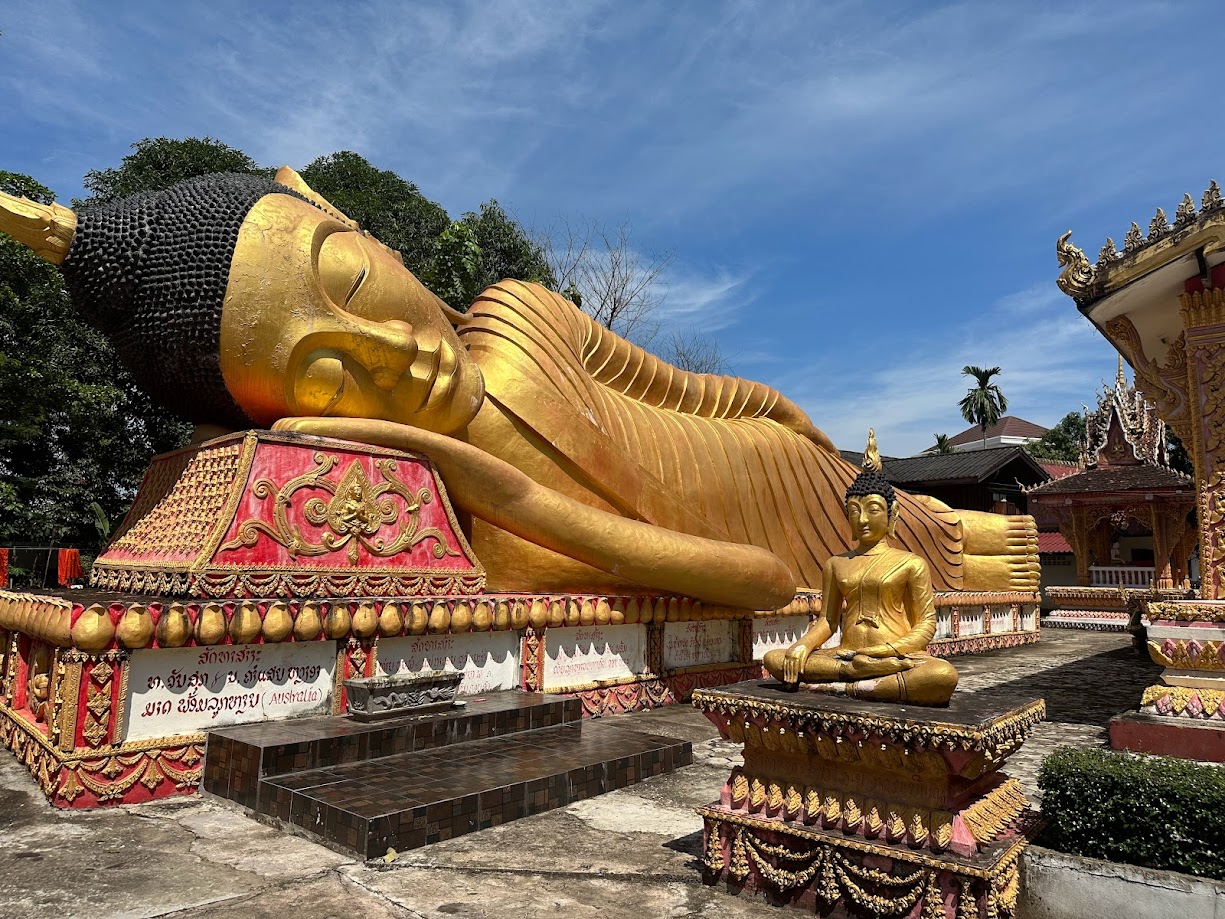
The Reclining Buddha
The “Reclining Buddha” statues you will often encounter in Laotian temples represent the end of Buddha’s earthly life and his attainment of Parinirvana (the final stage of enlightenment). These statues are usually depicted lying on their right side, with the head resting on the hand. You can visit these magnificent statues in places like Wat Pha Ki Luang in Vientiane and contemplate your own inner journey in the face of his tranquility.
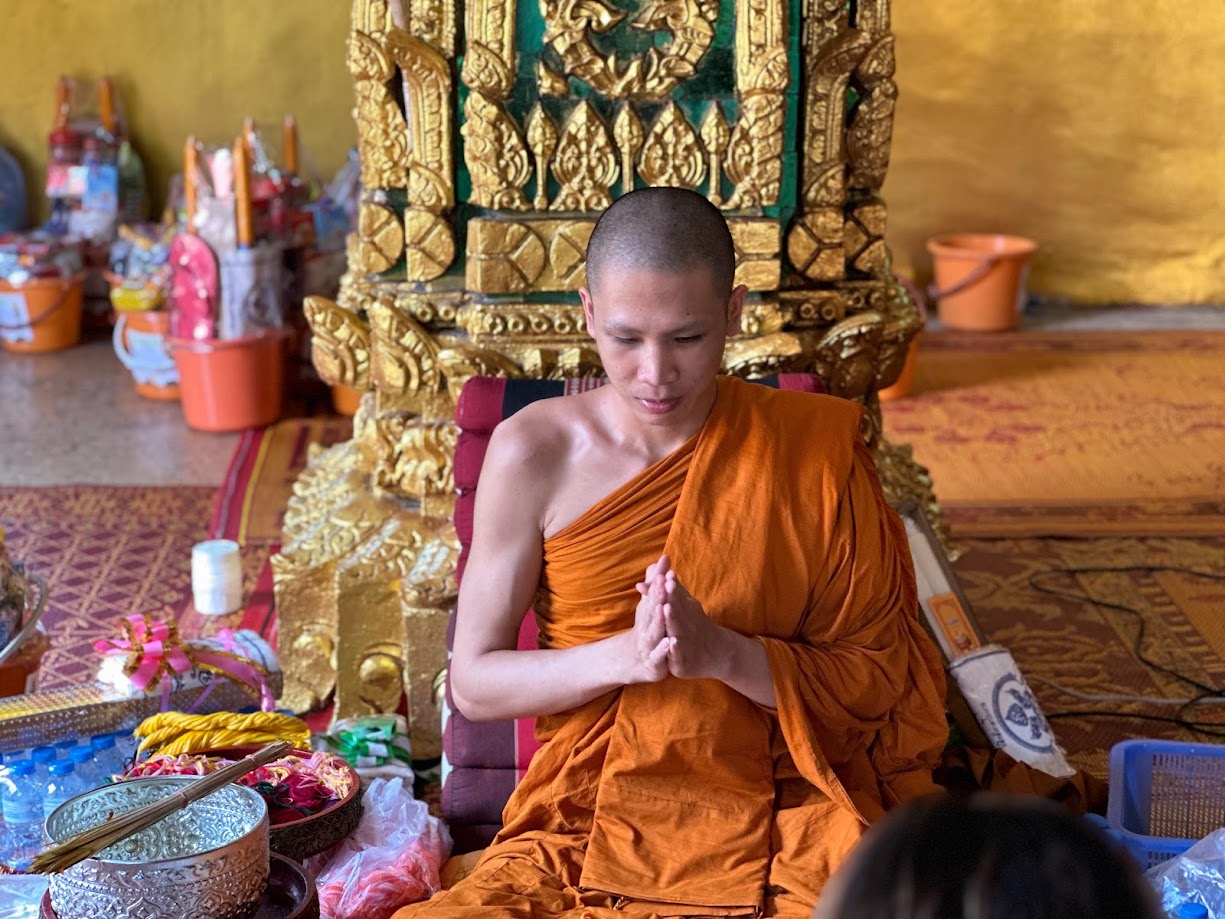
Worship Activities
- Morning Alms Giving (Tak Bat): Especially in regions like Luang Prabang, you can witness the ritual where monks walk barefoot at the first light of dawn to collect food offerings from the public. This is a deeply rooted tradition where the community gains spiritual merit and the monks maintain their modest lives.
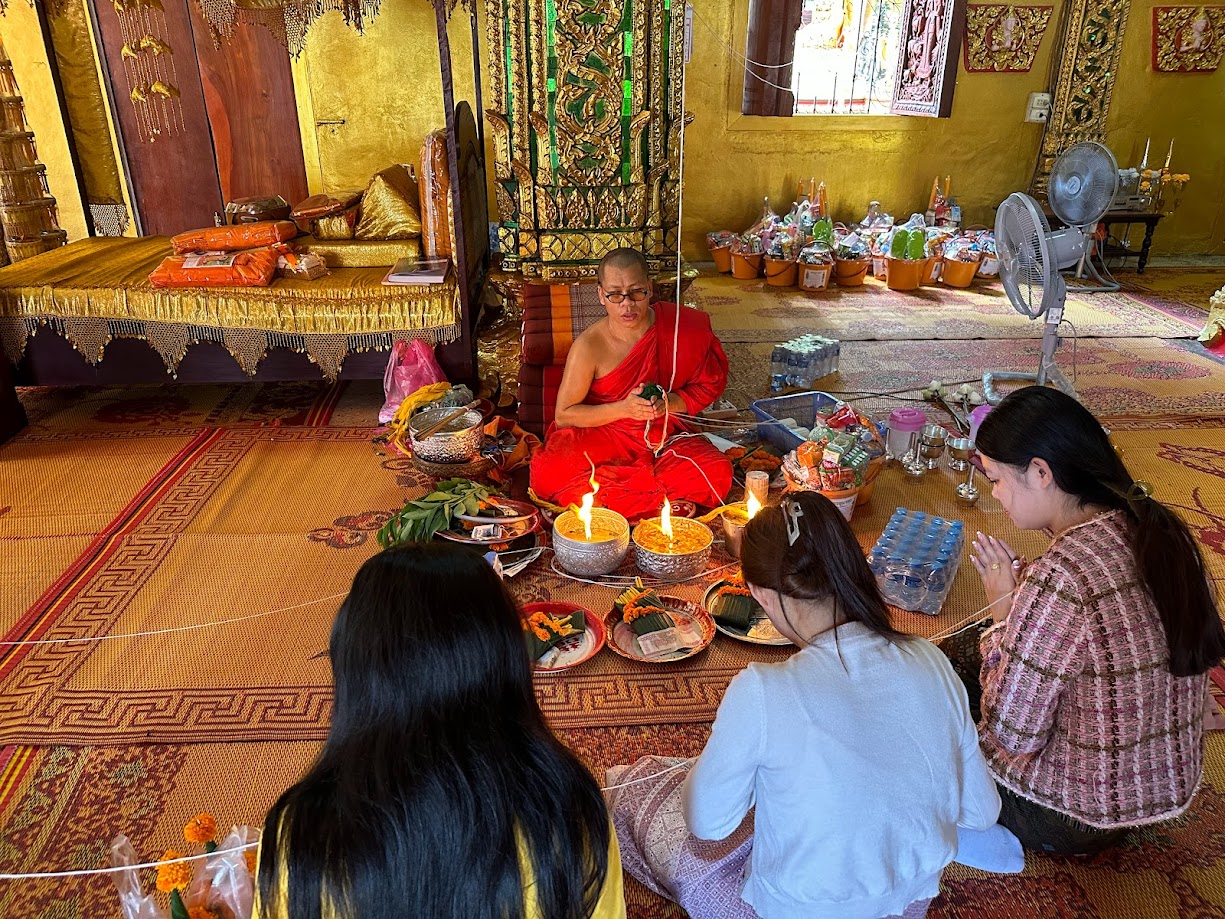
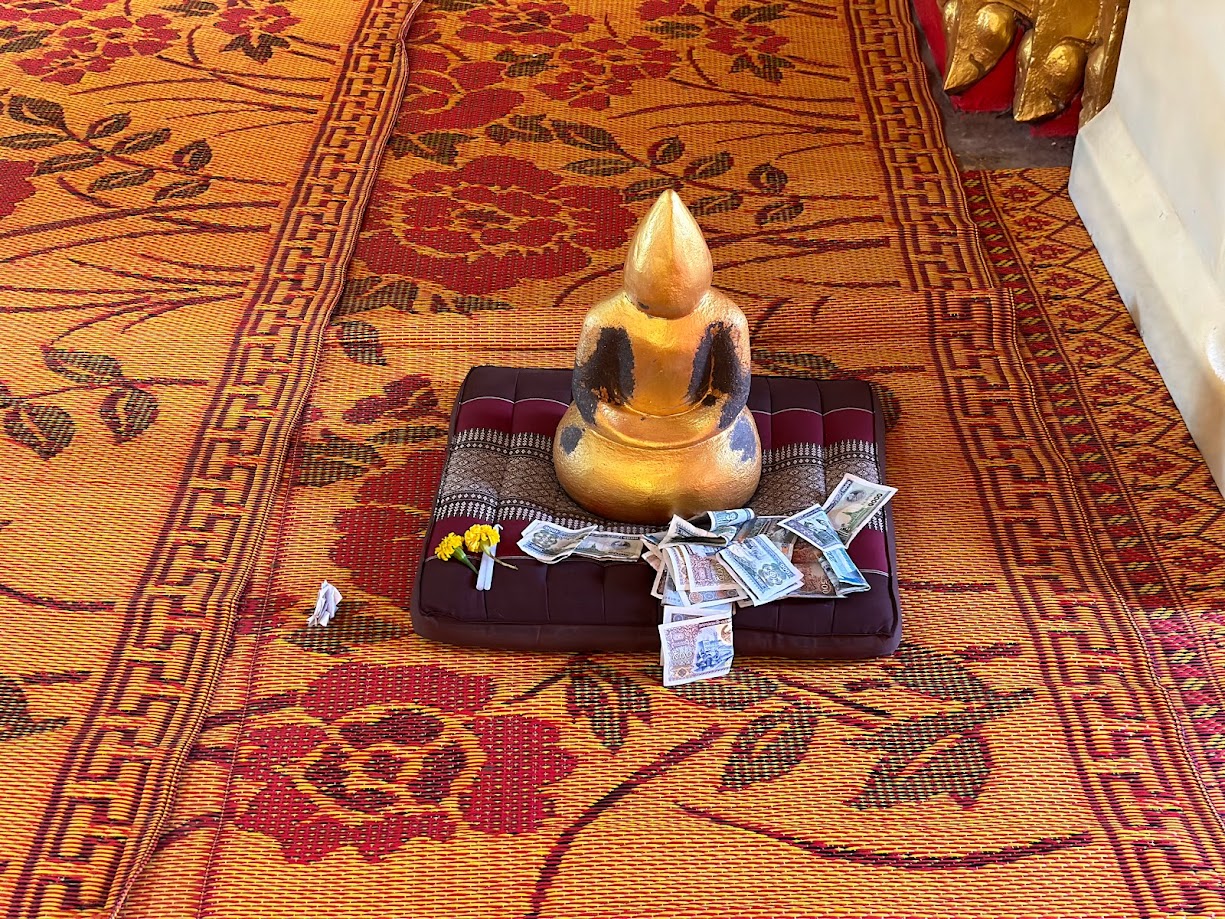
- Offerings and Meditation: Locals come to the temples to offer flowers, incense, and fruit. Kneeling, praying, and meditating in front of Buddha statues is the most fundamental way to purify the mind in Laotian culture.
Rules of Being “Invisible” During Temple Visits
Temples are sacred spaces for the Laotian people. Showing respect for this atmosphere as a tourist will enhance the quality of your experience.
- Attire: Ensure your shoulders and knees are covered. It is mandatory to leave your shoes outside when entering temples.
- Body Language: In Laotian culture, the head is the most sacred part of the body; touching someone’s head is a major taboo. Similarly, be careful that your feet are not pointing toward a Buddha statue or another person while sitting.
- Photography: Taking photos is generally allowed, but try to act as an “invisible” observer. Not disturbing those who are praying and not breaking the peace is the golden rule of being a “responsible traveler.”
- Show Respect: Never engage in disrespectful behavior toward the statues or structures within the temple; even in jest, trivializing religious values is not welcomed by the locals.
A Quick Tip for Travelers
When visiting Laos, do not focus only on the most popular temples (for example, Wat Xieng Thong in Luang Prabang). In the side streets of the city, you will see locals silently praying in their neighborhood temples. In those moments, you will meet the true face of Laos: peace, love, and serenity.
Laos does not invite you to hurry, but to stop and enjoy the moment. I wish you a peaceful journey where you can rest your soul in these mystical lands.
 English
  Turkish
  Spanish
  German
  French
  Russian
  Vietnamese
  Thai
Thai  Korean
  Japanese
  Kurdish
  Chinese